


1. The 64-Provider Specialty Group: Fix the Front Door First
-
Who we worked with: An outpatient specialty group with 10 local markets, 4 core treatment areas, and 64 providers. Its brand and website had grown up piece by piece, and it showed. The group needed a modern identity, one coherent digital experience, and more patients, all without putting Protected Health Information (PHI) at risk.
-
What we did: We started from the ground up with discovery, naming, visual identity, and a full website rebuild. The old intake form was the kind that makes people quit halfway (long, all on one page, and asking for everything at once), so we replaced it with a simple step-by-step flow. We audited every analytics and ad tag on the site and rebuilt the tracking so no third-party pixel could pick up patient information. Then we launched paid search and social campaigns and built treatment and location pages around the questions patients actually ask.
-
What happened:
- Form submissions jumped 4x in the first week after the new intake flow launched.
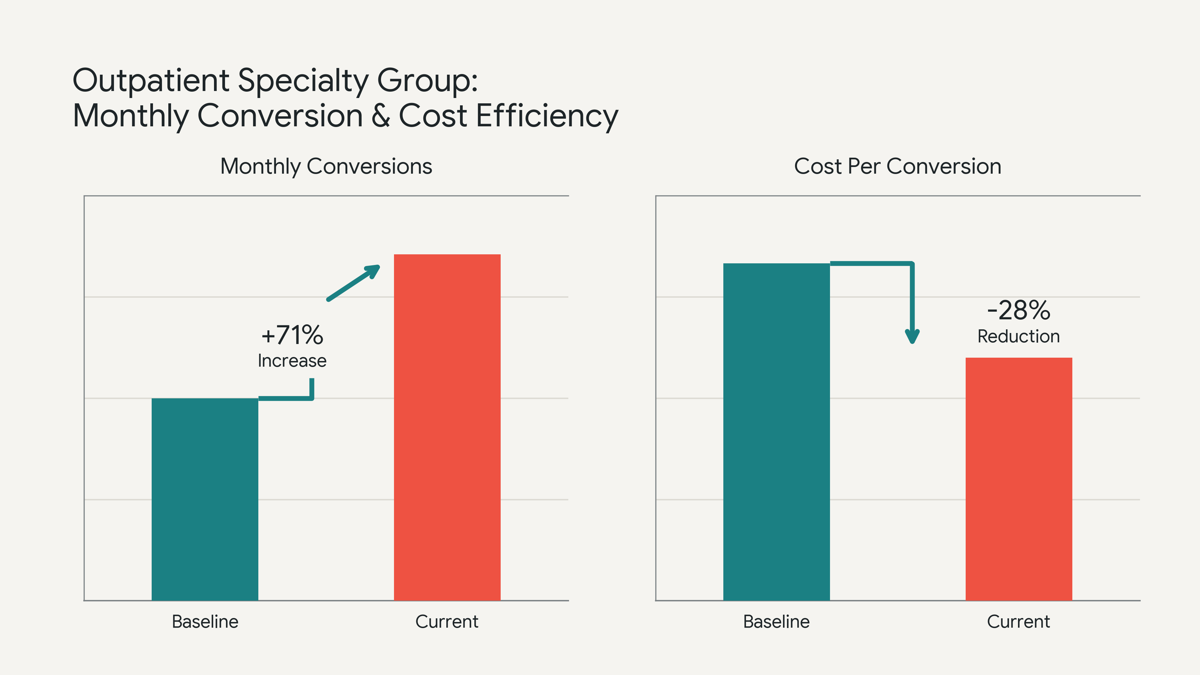
- By month three, monthly conversions were up 71% and cost per conversion was down 28%.
- The group earned 76% AI share of voice across ChatGPT, Gemini, and Google AI Overviews.
-
What it taught us: The cheapest patient you’ll ever reach is the one who was already on your website and almost filled out the form. Before buying more traffic, make it easy for the traffic you already have to say yes. And do the HIPAA tracking cleanup first.
2. The Regional Health System vs. Larger Medical Centers (A Budget Story)
-
Who we worked with: An independent regional health system competing for oncology, orthopedics, and cardiology patients against neighboring medical networks with much larger media budgets.
-
What we did: Over a multi-year partnership, we led brand and creative campaign development. The website had years of legacy pages piled up, so we consolidated them into clear, authoritative hubs for each service line. We ran media across connected TV, programmatic display, streaming audio, out-of-home, print, and paid search.
-
What happened:
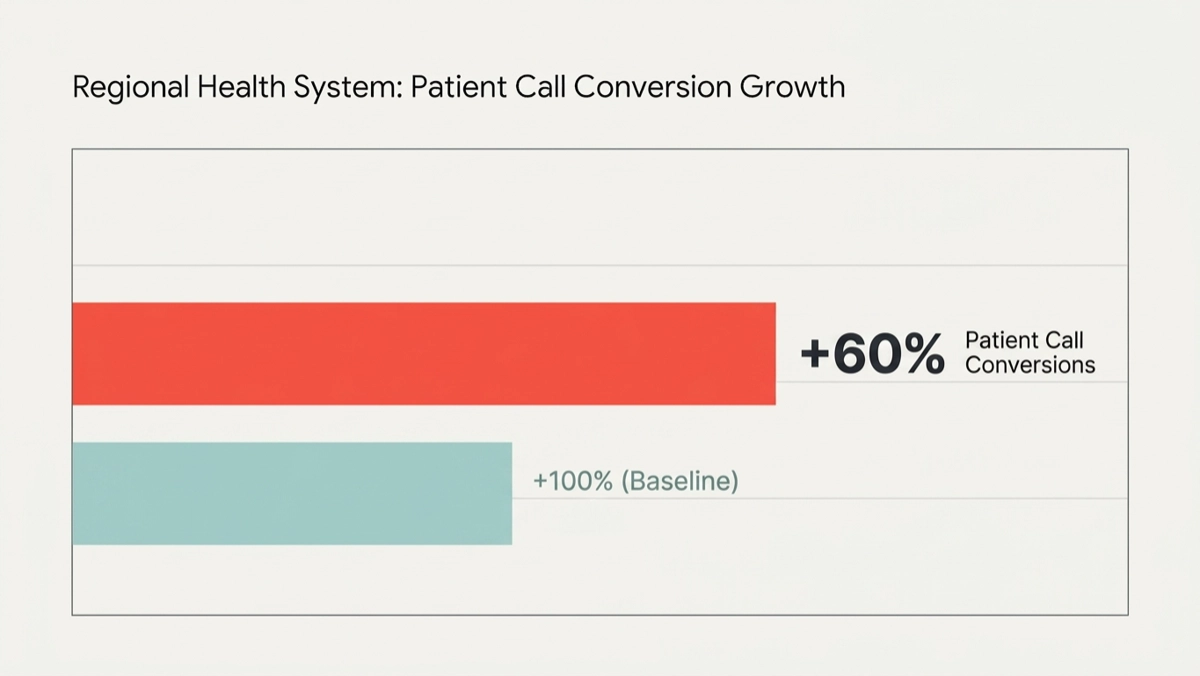
- Patient call conversions rose 60% across priority service lines.
- Search-driven clicks rose 85%, with click-through rate up 120%.
- A controlled brand lift study measured a 16% relative lift (5.5% absolute), with the strongest audience segments reaching 17% to 46%.
-
What it taught us: You can’t outspend a bigger system, but you can be easier to understand. When every service line has one clear home on your website, and measure brand with a real brand lift study. It’s the clearest way we know to show leadership that awareness work is doing its job.
3. The 8-State Concierge Network: 81 Campaigns and a Phone Problem
-
Who we worked with: A specialty concierge health network with clinics in 8 states. It was dealing with strict medical advertising policies, 81 campaigns running on manual bidding, budgets pooled across locations (so nobody could tell which service line in which clinic was working), and call tracking that counted some calls twice.
-
What we did: We rebuilt the advertising structure so budgets could be managed by service line in each location. We moved all 81 campaigns to conversion-focused bidding, added direct-response offers, and standardized creative across every clinic. We shifted money out of underperforming channels and into high-intent search, where each dollar produced 3 to 4 times more leads. We also raised the bar for a qualified phone lead from 30 seconds to more than 60 seconds and fixed the duplicate attribution.
-
What happened:
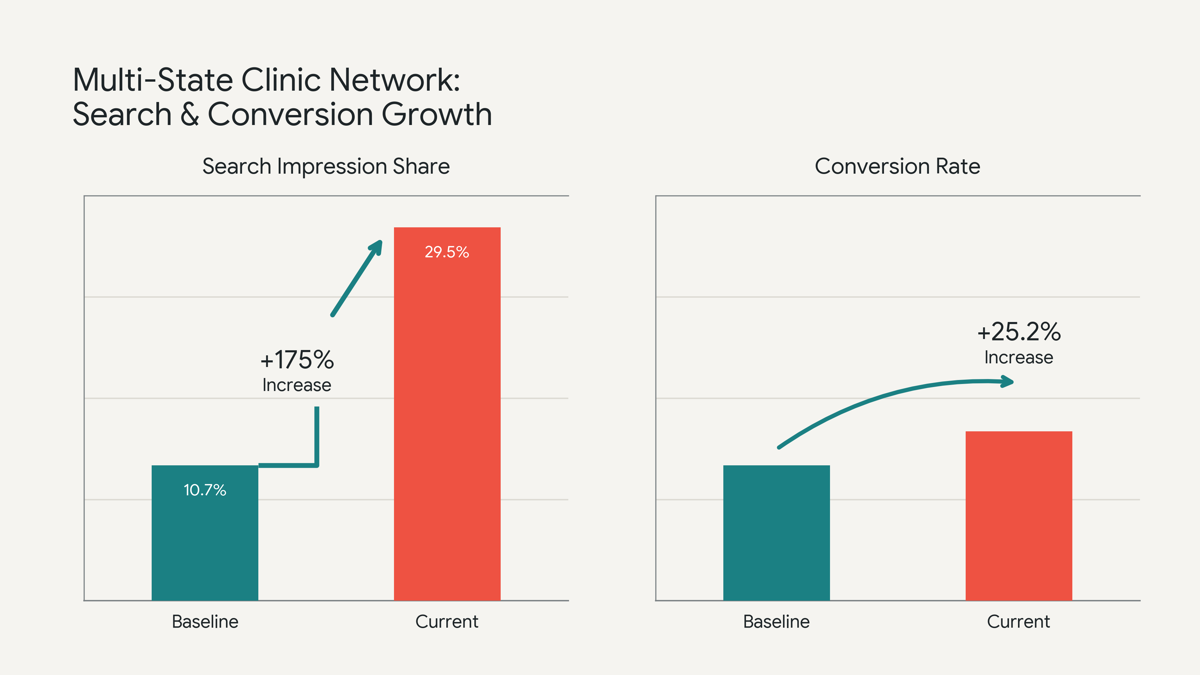
- Search impression share grew 175%, from 10.7% to 29.5%.
- Click-through rate rose 33.8% from the structural changes alone, before we touched the creative.
- After launching new creative and service-line budgets, click-through rate rose another 16.4% and conversion rate rose 25.2%.
- Blended cost per lead came in at $137 against a $169 goal, nearly 19% under target.
-
What it taught us: Before you spend more on ads, make sure you can trust the numbers.
4. The Critical Access Hospital: Convincing a Town to Stay Home (For Care)
-
Who we worked with: A critical access community hospital and its network of primary care clinics. Residents were leaving the area for primary, urgent, behavioral, and women’s health care that was already available close to home.
-
What we did: We launched bilingual campaigns in English and Spanish across paid search, social, local radio, print, and transit and outdoor media. We modernized the website and built hyper-local SEO and GEO around the care searches people were actually running. We also standardized clinic listings, created bilingual service-line pages, and kept provider rosters current.
-
What happened:
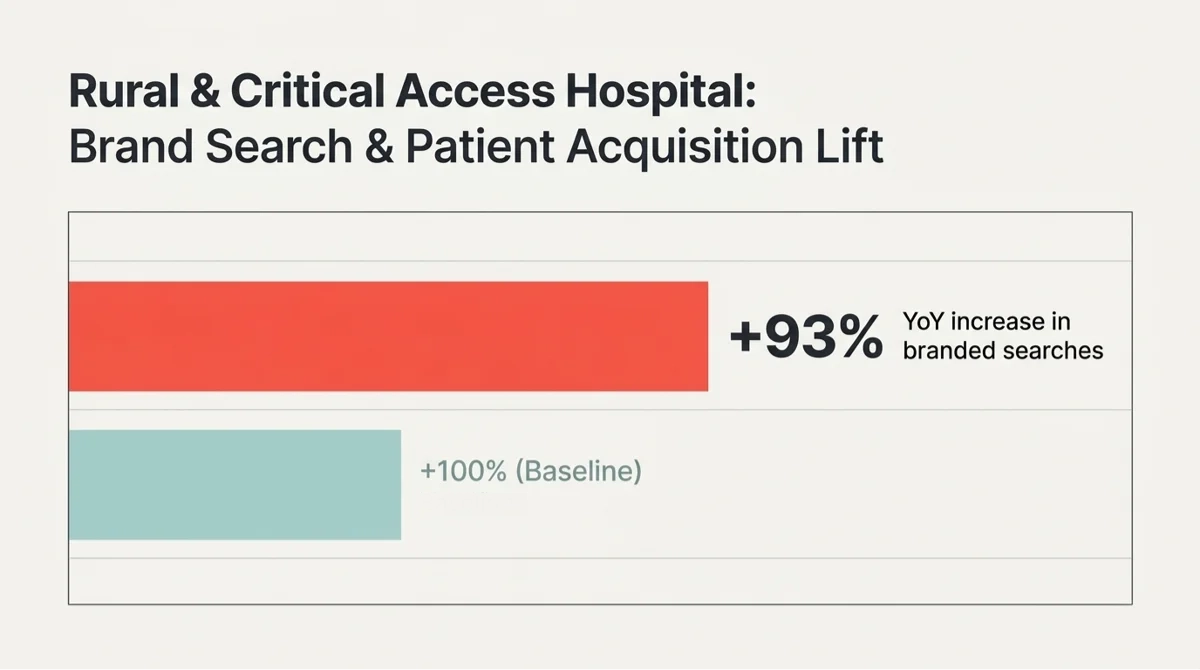
- The campaigns reached nearly 1 million residents and drove a 93% year-over-year increase in branded searches.
- Key service line search visibility grew 10x year over year.
- AI answers from Google AI Overviews and mobile assistants now surface accurate clinic locations, accepted insurance, and specialty services.
-
What it taught us: Patient leakage is often an awareness problem. People drive out of town for care because nobody told them it was available down the street. Tell them in the language they speak at home and in the places they already pay attention, from the radio to the bus stop. The 10x jump in key service line visibility was a good reminder that the need was there all along. People just needed to be able to find it.
5. The Rural Health Network That Needed Doctors More Than Patients
-
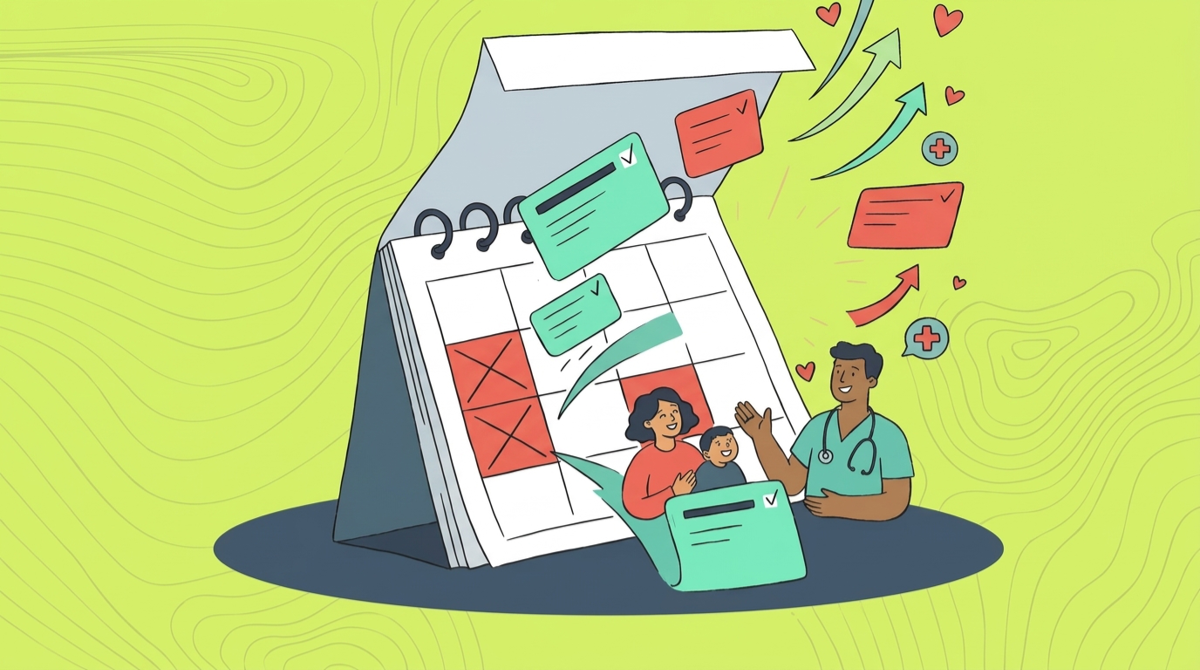
Who we worked with: A multi-site rural community health network facing a clinical provider shortage. With too few providers, clinic capacity was capped, and new facility openings kept getting pushed back. Patients were ready. The schedule wasn’t.
-
What we did: We built an employer brand and clinical recruitment campaign that pitched rural practice as a career advantage: more autonomy, real community impact, and a life that isn’t defined by urban burnout. We backed it with optimized landing pages and targeted digital media.
-
What happened:
- The campaign solved the provider shortage and opened up appointment capacity right away, setting the network up for steady patient volume growth.
- As new providers came on board, we added them to clinic location pages, which strengthened local search and AI visibility for the newly staffed service lines.
-
What it taught us: Recruitment marketing is patient marketing. Every empty provider seat is a waitlist, and sometimes the fastest way to grow a service line is to staff it. Hospital leaders who only file recruiting under HR are missing one of the most direct ways to improve access to care.
So, What Did All Five Teach Us?
A few things kept showing up, no matter the size of the organization or the shape of the problem.
- AI search is the new front desk. Clean, specific information about your providers, locations, accepted insurance, and service lines decides whether you get named in that two-to-five-provider answer.
- The unglamorous work pays off first. Intake forms, tracking, account structure, and attribution rarely make the highlight reel. They’re often where the biggest gains come from.
- Every campaign comes back to access. Whether the problem was a clunky form, a tight budget, low awareness, or an empty provider seat, the goal was the same: connect the right patients with the care they need, as close to home as possible.
Got a Healthcare Marketing Problem? We Like Those.
If you’re defending service lines against a bigger system, trying to keep patients local, or working out how to show up when patients ask AI where to get care, we’d love to hear about it. Tell us what you’re working on below and we’ll start the conversation.
We promise the form is short.
